ACCREDITATION AND RATING INTERNATIONAL AGENCY
First Uzbekistan non-governmental organization in the field of quality assessment of educational organizations and educational programs

About Us
Non-governmental organization Accreditation and Rating International Agency (ARIA) was established in 2024 and is the first Uzbekistan non-governmental organization in the field of quality assessment of educational organizations and educational programs.
ARIA focuses its activities on meeting the needs of all stakeholders, including students, their parents, academic staff, as well as educational organizations, government agencies, society, and employers in general.
News

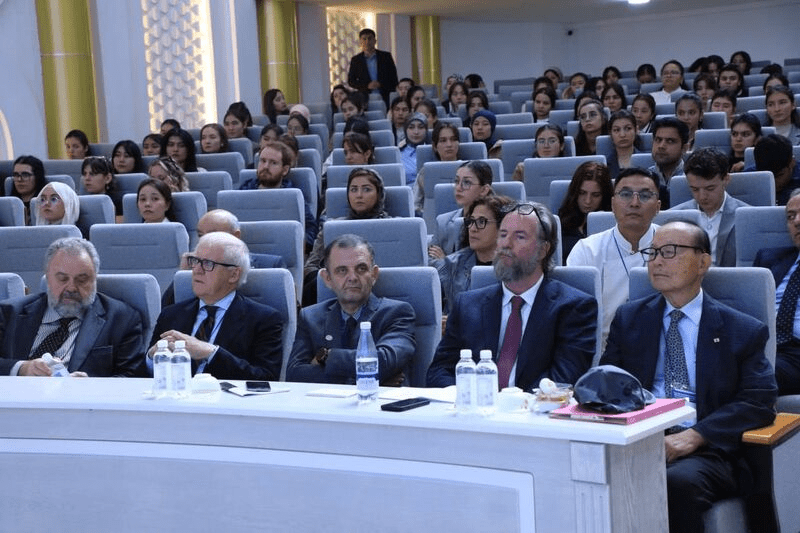
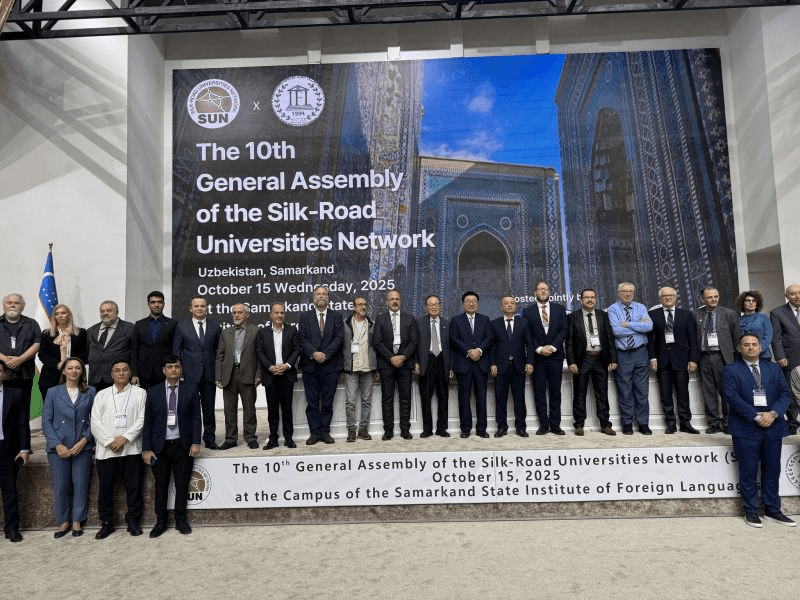
The 10th General Assembly of the Silk-Road Universities Network (SUN) continued its second day at the Samarkand Institute of Foreign Languages (SamSIFL).
The warm and welcoming atmosphere was enriched by students who presented the traditions of the nations whose languages are taught at SamSIFL. They also delighted participants with local gastronomy at their cultural booths, adding vibrant colors and flavors to the event.
The General Assembly proceeded with its official agenda — GA meetings and academic seminars provided a valuable platform to discuss pressing issues such as sustainable tourism in the era of AI and Big Data and the evolving role of universities in fostering global cooperation and innovation.

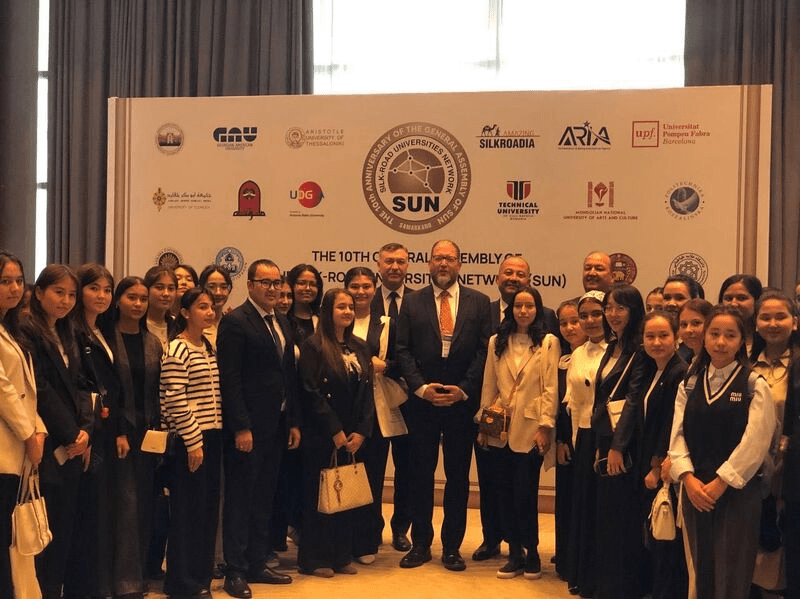

Honored to participate in the 10th General Assembly of the Silk-Road Universities Network (SUN) held in the inspiring city of Samarkand!
The opening ceremony took place in the Eternal City of Samarkand and was hosted by Samarkand International University of Technology (SIUT), Samarkand Institute of Foreign Languages (SIFL), and Silk Road University (SRU).
We are delighted to share that ARIA (Accreditation and Rating International Agency) joined the event as a partner, and we officially signed an MoU between ARIA and SUN — marking the start of our collaboration to promote quality in higher education, foster academic exchange, and strengthen capacity for quality assurance along the Silk Road. 🌍
…
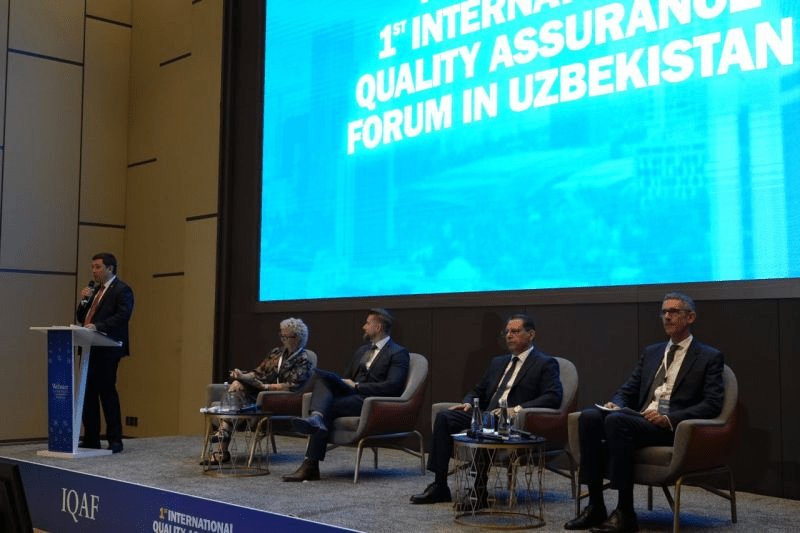
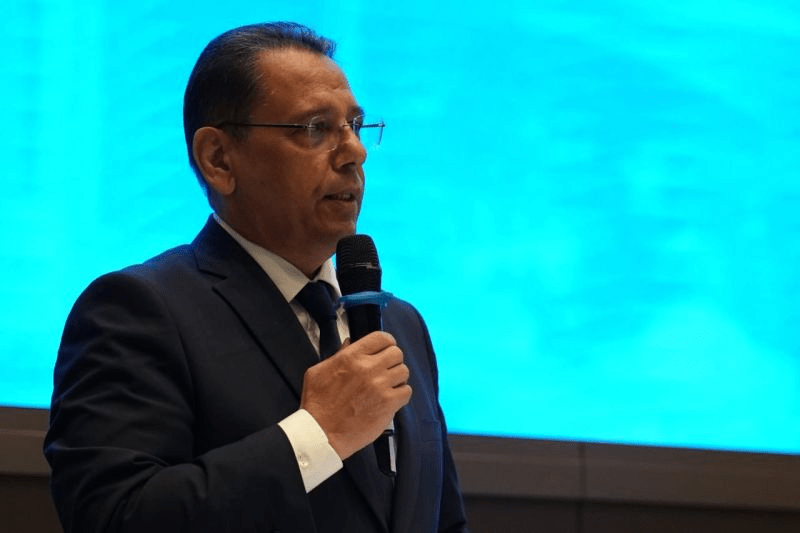

ARIA had the privilege to take part in the International Quality Assurance Forum (IQAF) hosted by Webster University in Tashkent.
The Forum brought together universities, experts, and QA professionals from around the world — all united by one goal: to ensure that higher education meets the highest international standards.
For ARIA, this was not just about participation, but about contributing to the dialogue on how ESG-aligned quality assurance practices can drive innovation and sustainability in Uzbekistan’s higher education system.
We truly appreciate Webster University Tashkent for organizing such an inspiring platform and for bringing the global QA community together.
Together, we are building a stronger foundation for the universities of tomorrow.

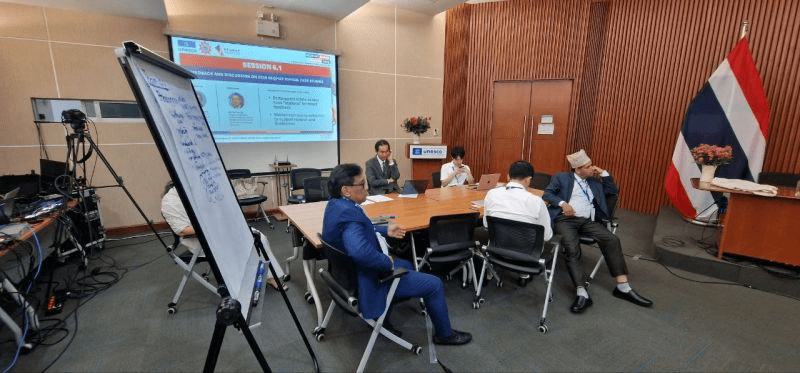
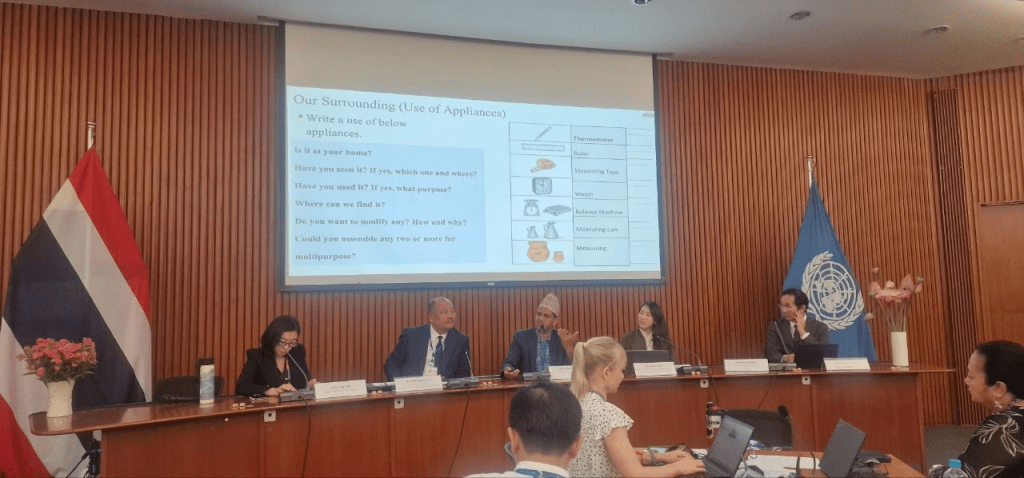
The Accreditation and Rating International Agency (ARIA) is proud to have taken part in the 2025 Annual Meeting of the Network on Education Quality Monitoring in the Asia-Pacific (NEQMAP), held on 8–9 July at UNESCO Bangkok.
🔗 Meeting details (https://lnkd.in/dDHTJp8Q)
This important gathering brought together experts, policymakers, and institutions from across the Asia-Pacific to strengthen collaboration on improving the quality of education through effective monitoring, assessment, and research.
Representing Uzbekistan, ARIA engaged in meaningful dialogue on advancing regional efforts in education quality assurance, aligning with global best practices, and fostering innovation in assessment frameworks.
…

Pleased to inform that we had a very productive online meeting with the team members of Accreditation Board for Engineering Education of Korea — ABEEK. Discussions covered the topics related to the collaboration in joint projects, participation in international events, cooperation in dealing with legal, administrative and financial issues of accreditation process and perspectives of participation in accreditation processes of Uzbek and Korean universities.
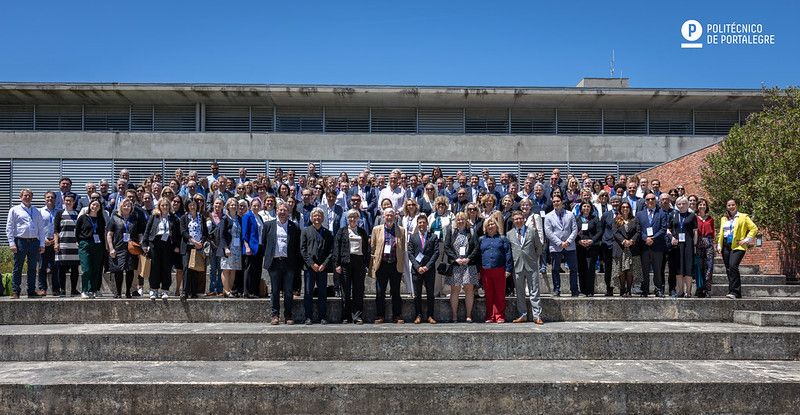

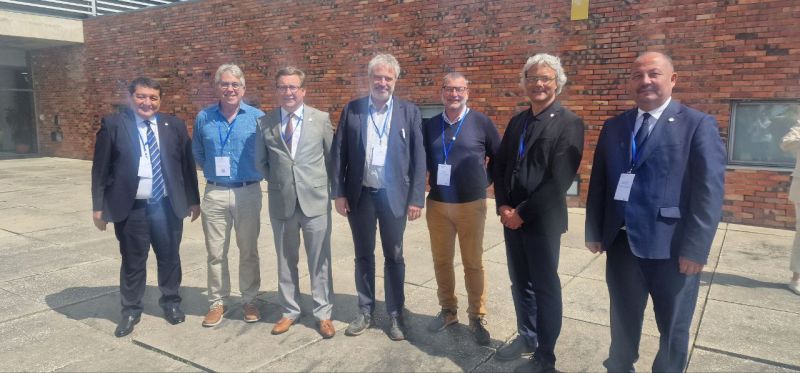
ARIA was pleased to take part in this year’s EURASHE Conference, where discussions around quality assurance, institutional development, and innovation in higher education were both engaging and productive.
Our team had the opportunity to share perspectives, connect with peers from across Europe, and establish valuable new partnerships. We’re grateful to EURASHE and the hosts in Instituto Politécnico de Portalegre for their excellent organization and warm hospitality.
We look forward to continuing the dialogue and reconnecting with colleagues at the next EURASHE Conference in Amsterdam in 2026!
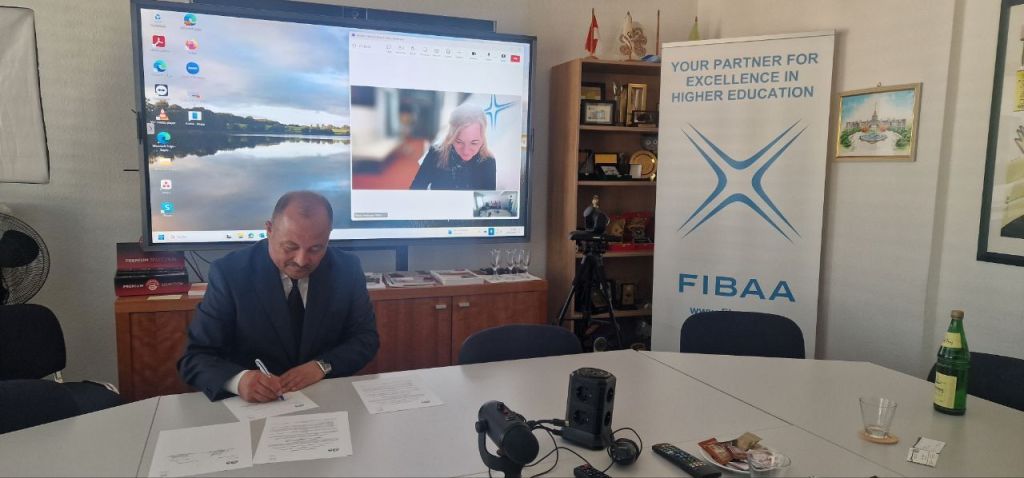
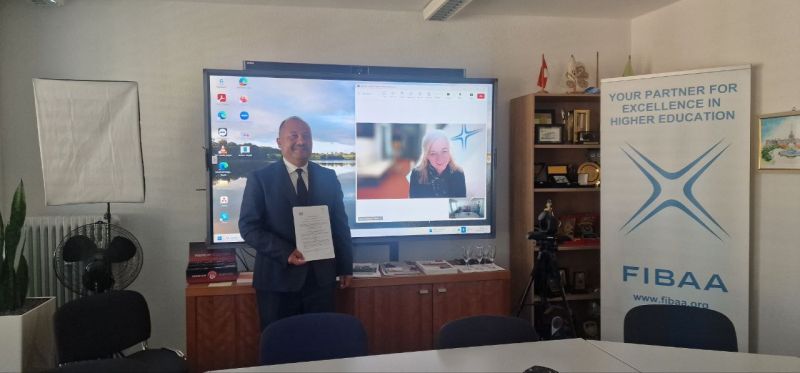
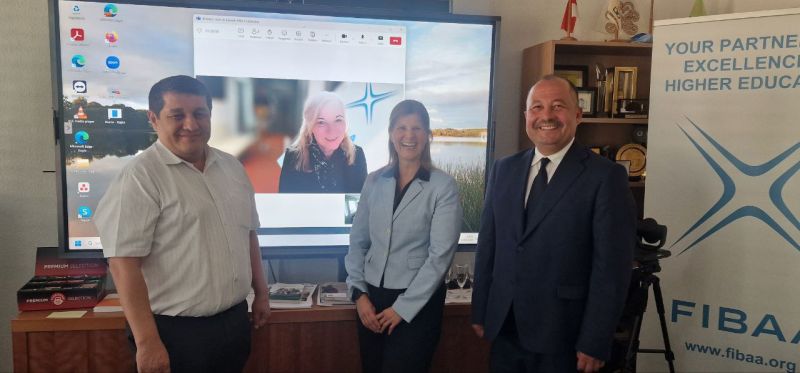
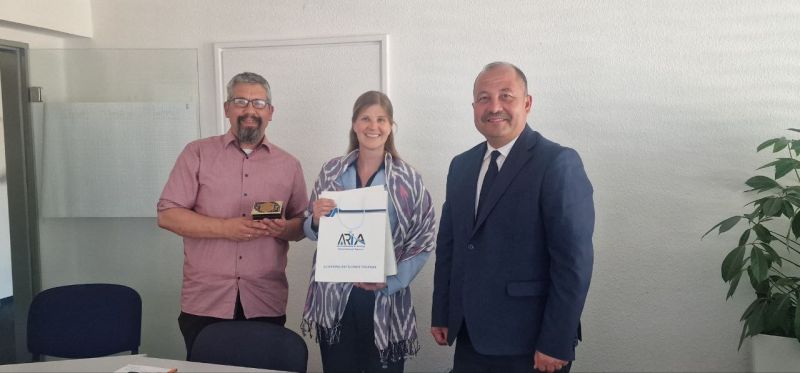
Accreditation And Rating International Agency (ARIA) Visits FIBAA in Bonn, Germany
ARIA had the distinct honor of visiting the Foundation for International Business Administration Accreditation — FIBAA at its headquarters in Bonn, Germany. Established in 1994 by prominent business associations from Switzerland, Austria, and Germany, FIBAA is a renowned non-profit organization committed to enhancing transparency and quality in higher education worldwide.
Initially focused on programs in economics, law, and social sciences, FIBAA has expanded since 2009 to include engineering, IT, education, natural sciences, and more. Today, it plays a key role in the accreditation of Bachelor’s and Master’s programs, as well as the institutional accreditation of higher education institutions both in Germany and internationally.
…

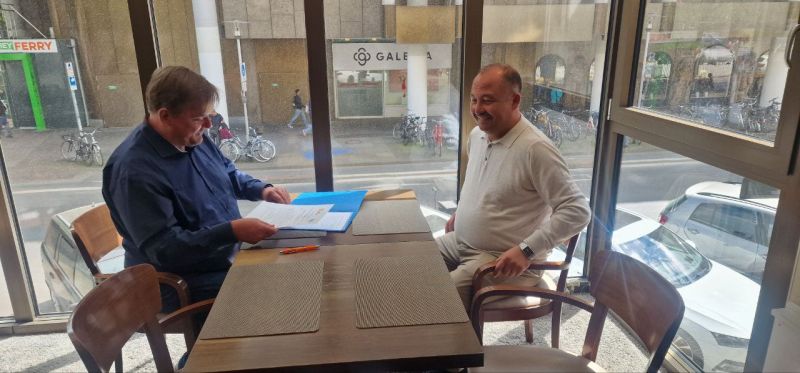

ARIA Strengthens International Ties with ZEvA in Hannover, Germany
The Accreditation and Rating International Agency (ARIA) had the honor of visiting the Central Evaluation and Accreditation Agency (ZEvA) in Hannover, Germany.
ZEvA is dedicated to the academic advancement of the European Higher Education Area, with a core mission focused on quality assurance in education. Its areas of expertise include accreditation, evaluation, and certification—supporting both public and private higher education institutions in delivering internationally comparable quality in research, teaching, and continuing education.
…
Memberships

Central and Eastern European Network of Quality Assurance Agencies in Higher Education

European Association of Institutions in Higher Education

Network on Education Quality Monitoring in the Asia-Pacific
Partnerships
Silk-Road Universities Network

Kelkar Education Trust’s Scientific Research Centre

European Council of Leading Business Schools (ECLBS)
The Supervisory Board of ARIA
The Supervisory Board of ARIA is the main decision making body of the agency. The Supervisory Board is responsible for approving perspective development strategy and plans, as well as annual and financial reports of the Agency.
It also takes the decisions about accreditations in order to ensure coherence and consistency of decisions.
The members of the Board are highly acclaimed international experts in higher education and quality assurance.
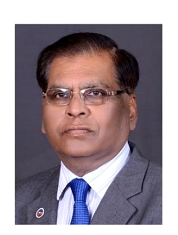
Prof. Raviprakash Dani
Gene Scan Inc.
President/CEO/Founder
(https://genescan.net) Houston, Texas
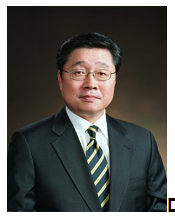
Prof. Sungdon Hwang
Professor Emeritus of Hanguk Foreign Studies
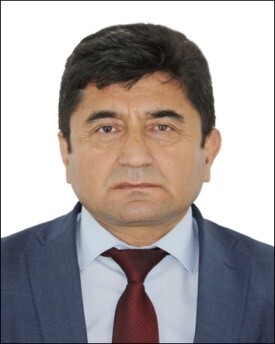
Alimzoda Nasim Olim
PhD in mathematics

Dariusz Zygadlo
Deputy dean, UDEA, Coventry University Programmes

Dr. Olalekan Ibitoye
PhD in Agricultural Economics. Professor of School of Business and Economics — Technology, Management and Communication Institute (TMCI)

Dorota Sylwia Majewicz
Ph.D., M.A.
Associate Professor
Koszalin University of Technology

Prof. Alan Buckingham
Professor of the University of Bristol- PhD in Sociology
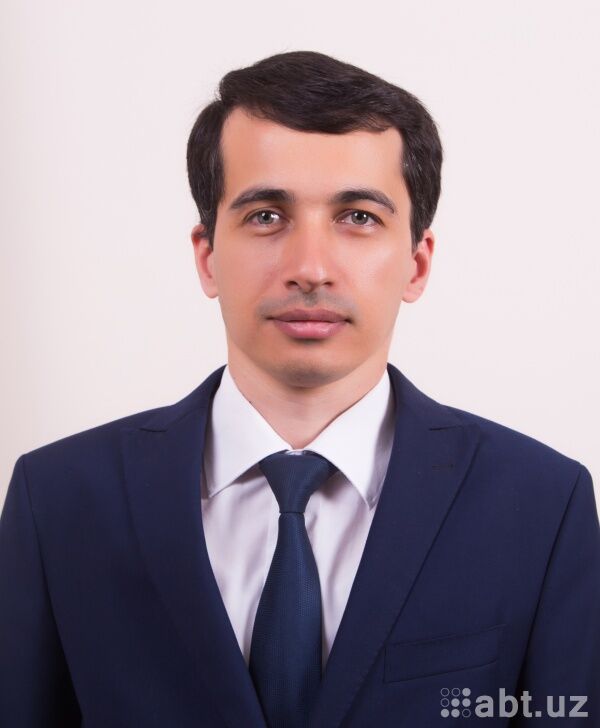
Asliddin A. Odilov
MSc in Mathematics
ARIA Strategy
ARIA focuses its activities on meeting the needs of all stakeholders, including students, their parents, academic staff, as well as educational organizations, government agencies, society, and employers in general.
The activities of ARIA comply with the International Standards and Guidelines for Quality Assurance. ARIA conducts international institutional and specialized (program) accreditation, at the national level, as well as it carries out international accreditation in other countries. The Agency is aimed to enhance the quality of education through quality assurance activities such as accreditation of educational institutions and study programs, auditing internal quality assurance systems, ranking of educational institutions and benchmarking.
The main activities:
- Increasing the level of compliance of higher and postgraduate, as well as technical and vocational education with the best international practices in the field of education through quality assurance activities
- Becoming one of the leading quality assurance agencies operating in Uzbekistan and Central Asia
- Becoming a full member of the European Association for Quality Assurance in Higher Education (ENQA) and enter the European Register of Quality Assurance Agencies (EQAR)
- Increasing the number of highly qualified experts in the field of education quality assurance by training them
- International institutional and specialized (program) accreditation of higher and postgraduate, technical and vocational, additional education, research organizations and international schools
- Development of standards and guidelines for the quality assurance of education in accordance with international standards and guidelines
- Dissemination of international best practices in quality assurance in the activities of educational organizations
- Training and professional development of experts in the field of quality assurance
- Participation in research and international projects
- Organization and holding of international conferences and forums
- Development of scientific, methodological and informational publications
- Rating studies in the field of higher and postgraduate education
Regulatory Documents
National Cooperation
What competitive advantages does international accreditation provide to educational organizations?
To HEIs:
— international recognition, comparability and convertibility of qualifications assigned by the HEI, confirmation of guarantees of high quality education and services, their compliance with international requirements
— increasing the attractiveness of the HEI and the confidence of the main stakeholders in the effectiveness and efficiency of implemented educational programs
— qualitative evaluation of the level of its activities and implemented educational programs to obtain objective information on the unutilized possibilities, potential and prospects of development
— wide integration into the world educational space and access to the foreign market of educational services
— image growth and strengthening of competitive positions in the national and international educational services market
— support of institutional changes not only in a particular HEI, but also at the level of the entire higher education system of the country
To Learners — Opportunities for:
— participation in various academic mobility programs in foreign partner universities with the offset of existing credits
— admission to other foreign universities for master’s and doctoral programs
— increase the competitiveness of the graduate both on the national and international labor market, employment by profession in the country and abroad.
International Cooperation
International Accreditation is a procedure for assessing the compliance of educational programs with international and European quality standards, carried out by accreditation agencies that are members of the European Association for Quality Assurance in Higher Education ENQA and are registered in the European Quality Assurance Register for Higher Education EQAR. International Accreditation is the most widespread and effective model in the world for the quality assurance of education.
The basic principles of international accreditation:
— independence, objectivity and professionalism
— transparency, reliability and relevance of information on accreditation procedures
— collegial decision making
Conferences and Forums
Key Principles of the Report Preparation
The self-assessment report (SAR) is one of the basic documents of international accreditation.
Structuring: strict compliance of the presented information with the sections of the document.
Readability: the text of the document should be easy for apprehension from the point of view of printing, semantic and stylistic features of the text.
Analyticity: analysis of advantages and disadvantages, analysis of development dynamics of the EO or EP (cluster of programs).
Criticism: objectiveness of assessment.
Conclusiveness: provision of facts, data, information as arguments for conclusions.
Those features of the study program which have not been described in the guidelines must be included in the documents of the corresponding part.
During the cluster accreditation the aspects common to all programs are described once in the introductory section to avoid repetition.
The final document must be well-structured, the pages numbered (including annexes).
Annual report
Non-governmental organization Accreditation and Rating International Agency (ARIA) was established in 2024 and is the first Uzbekistan non-governmental organization in the field of quality assessment of educational organizations and educational programs.
ARIA focuses its activities on meeting the needs of all stakeholders, including students, their parents, academic staff, as well as educational organizations, government agencies, society, and employers in general.
Annual report will be published by the end of 2024.
Annual work plans
ARIA strategic development plan for 2024 — 2030 provides for the main directions of development of the agency and external stakeholders in the field of education, taking into account the mission, vision, values and objectives of ARQA and the definition of methods to achieve them.
The strategic plan was developed by the ARIA management and approved by the Supervisory Board.
Strategic Development Plan for ARIA for 2024 — 2030 will be published soon.
Stages of accreditation
- Applying for accreditation.
- Conclusion of a contract between the EO and ARIA.
- Preparation of a self-assessment report.
- EEP site visit to an educational organization
- Decision-making by ARIA
- Follow-up procedures
Institutional Accreditation
The procedure for recognizing the compliance of educational services with the established accreditation standards (regulations) by an accreditation body. The purprose of which is to provide objective information about the services’ quality and confirm the presence of effective mechanisms for improving it.
Quality assessment of an educational institution by the accreditation body for its compliance with the declared status and established accreditation standards.
Program Accreditation
The procedure for recognizing the compliance of educational programs with the established accreditation standards (regulations) by an accreditation body. The purprose of which is to provide objective information about their quality and confirm the presence of effective mechanisms for improving it.
Quality assessment of individual educational programs delivered by an educational organization for their compliance with the declared status and established accreditation standards.
Post-Accreditation Monitoring
Post-accreditation monitoring is the accreditation stage from the date of obtaining accreditation status to the next independent external evaluation, the purpose of which is to maintain compliance with accreditation standards.
Post-accreditation monitoring is carried out in order to monitor the implementation of the recommendations of the External Review Panel given to the accredited educational organization and/or educational programs in accordance with the standards of institutional/specialized (program) accreditation.
An interim report compiled by the educational organization contains information on the implementation of recommendations by an External Review Panel regarding an accredited educational organization and / or educational program for the entire period from the moment of receipt of an accreditation certificate and includes information on all changes in educational organization in accordance with accreditation standards and criteria.
National Experts
ARIA expert must know:
— latest version of laws and regulations in the field of education and science of the Republic of Uzbekistan and internationally;
— techniques and methods of work with service information and personal data;
— Agency standards and guidelines for the relevant type of accreditation;
— ways to conduct conformity assessment to the standards during the accreditation process, to the Agency standards and government requirements of educational organizations and/or educational programs stated for accreditation;
-requirements for content and drawing up of the Commission Conclusions on accreditation assessment, and documents prepared in implementing the accreditation assessment procedure of educational organizations and/or educational programs.
International Experts
ARIA expert should be able to:
— analyze, systematize and generalize information;
— review self-reports and reports of educational organizations on institutional and specialized accreditation;
— carry out the questionnaire and process its results;
— gather information using a surveys, interviews and other methods of oral and written communication;
— estimate various resources;
— draw up the Commission Conclusions and others documents on assessment using computer and information technologies;
— form and draw up a report on the results of the external expert commission’s visit;
— interact with other experts, accreditation body, educational organization during the accreditation assessment process.
— analyze the educational programs of the educational organization (including study plans, academic program, discipline (module) and other materials regarding quality education and training, spiritual and moral development of students, and also program of learning and work practice, calendar plan, teaching materials providing the implementation of the educational program);
— establish the content of the training (non-)compliance of students and graduates of educational organization to state educational standards and requirements;
The expert’s level of qualification should comply with the Agency requirements, taking into account changes in the legislation in the field of education (as well as in the state educational standards and requirements), improvement the form and methods of implementing the accreditation assessment, development of the computer and information technologies through advanced training and by self-education.
Expert participates in seminars, conferences and other activities organized by the Agency and/or other organizations.
Higher Education Accreditation
The procedure for recognizing the compliance of educational services with the established accreditation standards (regulations) by an accreditation body. The purprose of which is to provide objective information about the services’ quality and confirm the presence of effective mechanisms for improving it.
Quality assessment of a higher educational institution by the accreditation body for its compliance with the declared status and established accreditation standards.
The procedure for recognizing the compliance of educational programs with the established accreditation standards (regulations) by an accreditation body. The purprose of which is to provide objective information about their quality and confirm the presence of effective mechanisms for improving it.
Quality assessment of individual educational programs delivered by an educational organization for their compliance with the declared status and established accreditation standards.
Accreditation of Technical and Vocational Education
The institutional and program accreditation procedures are developed by the Agency under European and international standards, which include the following stages:
1st stage. Preparation of the self-assessment report
2nd stage. Conducting an external evaluation
3rd stage. Analysis of the report of the external expert group and consideration by the Accreditation Council
4th stage. Post- accreditation monitoring
Pre-school Organisations accreditation
The standards of the ARIA were developed specifically for the accreditation of preschool organizations, taking into account current international trends and the national Uzbekistan context. These standards of institutional accreditation cover all aspects of the activities of preschool organizations and include the following areas:
- Mission, leadership, and management;
- Relationships;
- Curriculum, training, and progress assessment;
- Children’s health and safety;
- Competence of teaching staff and staff;
- Physical environment.
The standards contain regulatory requirements, criteria for evaluating the activities of preschool organizations and are the main document for the organization of education when preparing a self-assessment report, for experts — when examining these reports and conducting an external audit.
Purposes of accreditation of preschool education
1. Providing a mechanism for ensuring the quality and effectiveness of the educational process in preschool institutions;
2. Stimulating the activities of the organization in the direction of improving the quality of preschool education and upbringing;
3. Providing a real opportunity for parents of preschool children to choose an individual educational route for their child from a wide range of high-quality educational services.
Accreditation of Further Education
Additional professional education is aimed at meeting the educational needs throughout life in order to obtain an additional amount of knowledge and skills in accordance with the ongoing socio-economic changes in society.
Additional adult education is provided by the educational organizations, as well as the legal entities that have structural divisions that implement additional educational programs.
In the process of institutional accreditation, the quality of education and the scientific activity of the educational institution is evaluated. The ARIA standards and criteria for institutional accreditation are developed in accordance with the Standards and Guidelines for Quality Assurance in the European Higher Education Area (ESG) and are intended for the internal quality assurance of the educational institution.
Through accreditation, the educational institution has the opportunity to receive an independent expert assessment and measures to further improve its activities.
The accreditation procedure of the educational program is carried out by independent international and national experts in accordance with the Standards and criteria of the ARIA program accreditation and covers all aspects of the educational program.
After receiving accreditation, the Agency annually conducts post-accreditation monitoring (PAM). Educational institutions must submit an annual report to ARIA on the changes and achievements that have occurred during the year in order to carry out continuous monitoring of activities and periodic evaluation of educational programs. Periodically and selectively, monitoring is carried out with a visit directly to the educational organization. All procedures for post-accreditation monitoring are prescribed in the Regulations on Post-accreditation Monitoring.
Thus, by promoting high quality in education, the Agency provides an opportunity for educational organizations to eliminate the identified inconsistencies and improve their activities.
Selection Criteria
The expert’s level of qualification should comply with the Agency requirements, taking into account changes in the legislation in the field of education (as well as in the state educational standards and requirements), improvement the form and methods of implementing the accreditation assessment, development of the computer and information technologies through advanced training and by self-education.
Expert participates in seminars, conferences and other activities organized by the Agency and/or other organizations.
ARIA expert should be able to:
— analyze, systematize and generalize information;
— review self-reports and reports of educational organizations on institutional and specialized accreditation;
— carry out the questionnaire and process its results;
— gather information using a surveys, interviews and other methods of oral and written communication;
— estimate various resources;
— draw up the Commission Conclusions and others documents on assessment using computer and information technologies;
— form and draw up a report on the results of the external expert commission’s visit;
— interact with other experts, accreditation body, educational organization during the accreditation assessment process.
— analyze the educational programs of the educational organization (including study plans, academic program, discipline (module) and other materials regarding quality education and training, spiritual and moral development of students, and also program of learning and work practice, calendar plan, teaching materials providing the implementation of the educational program);
— establish the content of the training (non-)compliance of students and graduates of educational organization to state educational standards and requirements;
Training of Experts
The expert’s level of qualification should comply with the Agency requirements, taking into account changes in the legislation in the field of education (as well as in the state educational standards and requirements), improvement the form and methods of implementing the accreditation assessment, development of the computer and information technologies through advanced training and by self-education.
Expert participates in seminars, conferences and other activities organized by the Agency and/or other organizations.
Send a request for a free consultation
Our specialist will contact you to confirm the date and time of the meeting
Visit Us
Katta Chilonzor-2 MFY, 2 mavzesi, 25 Uy,
Chilonzor distr., Tashkent, Uzbekistan, 100100
Contact Us
info@aria-uz.org
+998 33 808 87 00
